✨ Home
Home

A deeply personal food guide to Lisbon and Porto — from a Michelin-starred tasting menu to a market stall octopus hot dog. These are the places worth every bite.
Portugal doesn't make a lot of noise about its food. And maybe that's the point. The cuisine here is built on restraint, on ingredients so good they barely need a supporting cast. An isolated country at the edge of the Atlantic, shaped by centuries of maritime discovery, Portugal brought back spices from Africa, Asia, and South America and somehow managed to make them feel completely at home.
What you'll find in Lisbon and Porto is not just good food. It's food that tells you something. About the land, the sea, the people who stayed behind while the sailors left, and the ones who cooked to keep memory alive.
We spent time in both cities eating our way through markets, tasting menus, late-night tavernas, and one very memorable octopus stall. This is everything we'd do again.
Before we get into specific spots, let’s talk about the non-negotiables. Every first-time visitor to Portugal has heard about the pastéis de nata — those impossibly flaky egg custard tarts caramelized on top. And yes, the hype is real. But there’s a dish that almost no one talks about until they’ve had it, and then they can’t stop talking about it.
Everyone talks about the custard tarts. Nobody warns you about the octopus. That might be Portugal’s best-kept secret.
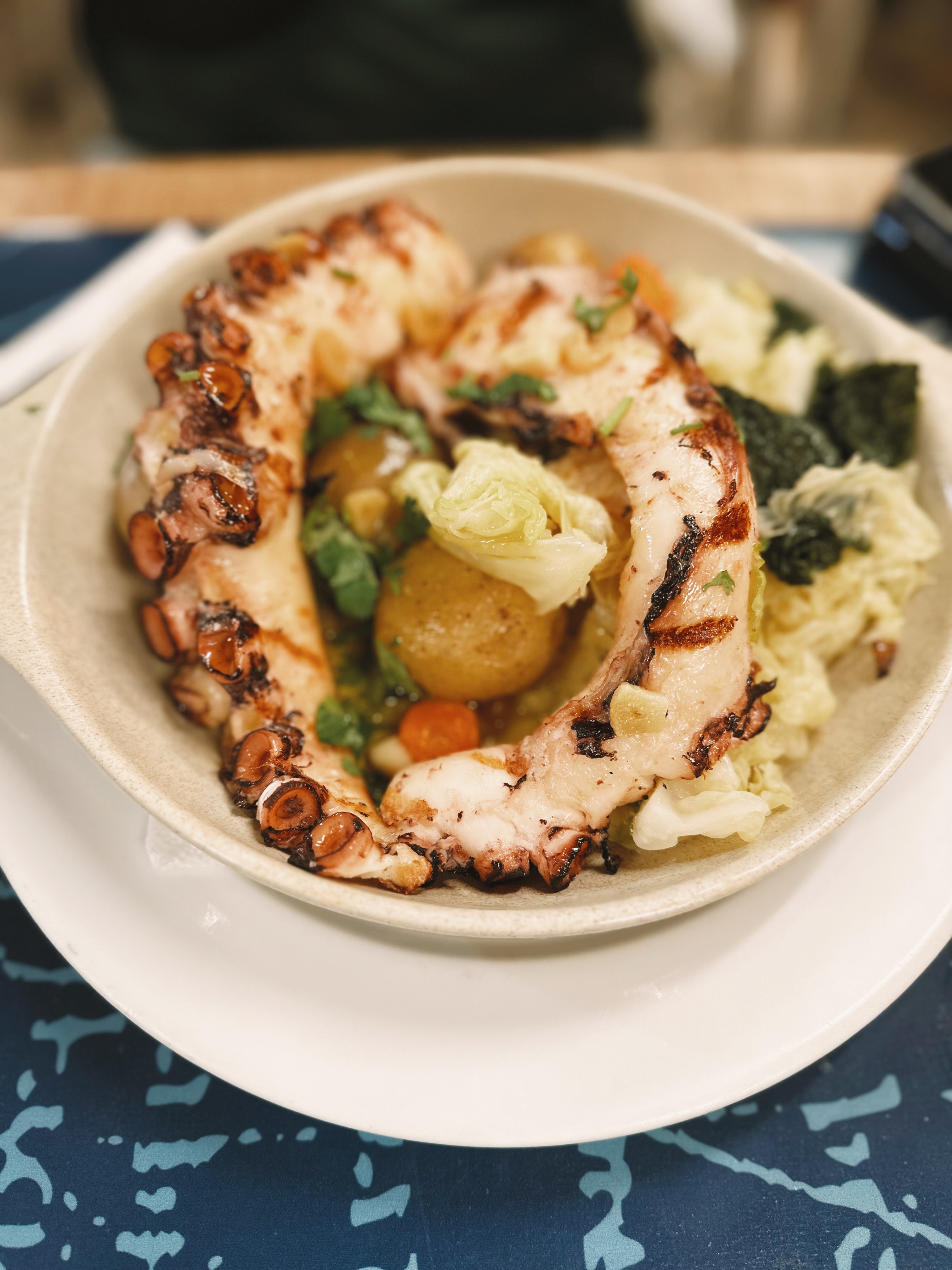
The octopus here is something else entirely. Fresh, charcoal-grilled, tender enough to cut with a spoon, and served everywhere from Michelin-starred tables to market stalls. Once you’ve had it done right, you’ll be chasing that experience for the rest of your trip. We did.
A few other things worth knowing before you eat your way through the country: bacalhau (salted cod) shows up in dozens of forms and is genuinely worth trying in every variation. Caldo verde, the simple potato and kale soup with chouriço, is humble and perfect. And if you’re visiting in June, grilled sardines during the Lisbon street festivals are a reason to time your trip around them.
Belém, Lisbon — Affordable — Must-visit
This is the octopus spot. Clams that taste like the sea, turmeric, butter, and garlic. Octopus so tender it practically melts. A hot stone steak still sizzling when it arrives. And a local crowd eating at 10:30pm the way dinner is supposed to feel. The bakery side has pastéis de nata too, though ours was closed when we arrived, that just gave us a reason to come back.
Google Map: https://maps.app.goo.gl/V884M2JWDpUuLZC76
Belém, Lisbon — Affordable — Iconic
Skip the lines inside and order your custard tarts to go. Find a bench under the jacaranda trees nearby and eat them warm. That’s the move. The tart is exactly what it should be: shatteringly flaky, custard that trembles, a char on top that gives it something almost smoky. Don’t overthink it. Just eat it outside.
Google Map: https://maps.app.goo.gl/bNDa2YsX4QSkANbq8
Downtown Lisbon — Mid-range to splurge — Worth it
Set inside a former fish cannery, Prado is one of those restaurants that makes you feel like you discovered something. Everything is local, from the ceramics on the table to the producers on the wine list. The menu shifts with the season. Minimalist space, deeply considered food. Book ahead.
Chiado, Lisbon — Splurge — Michelin-starred
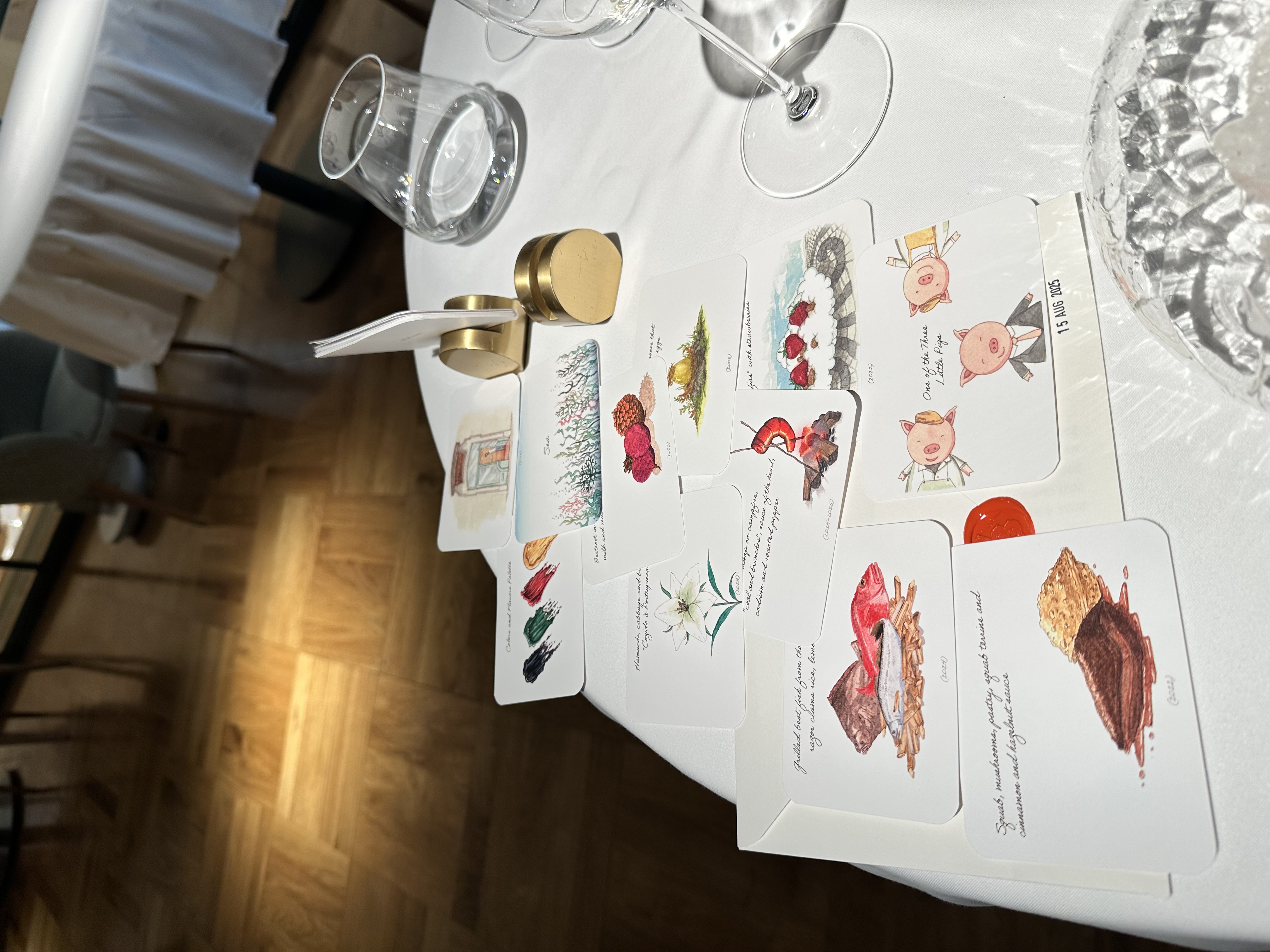
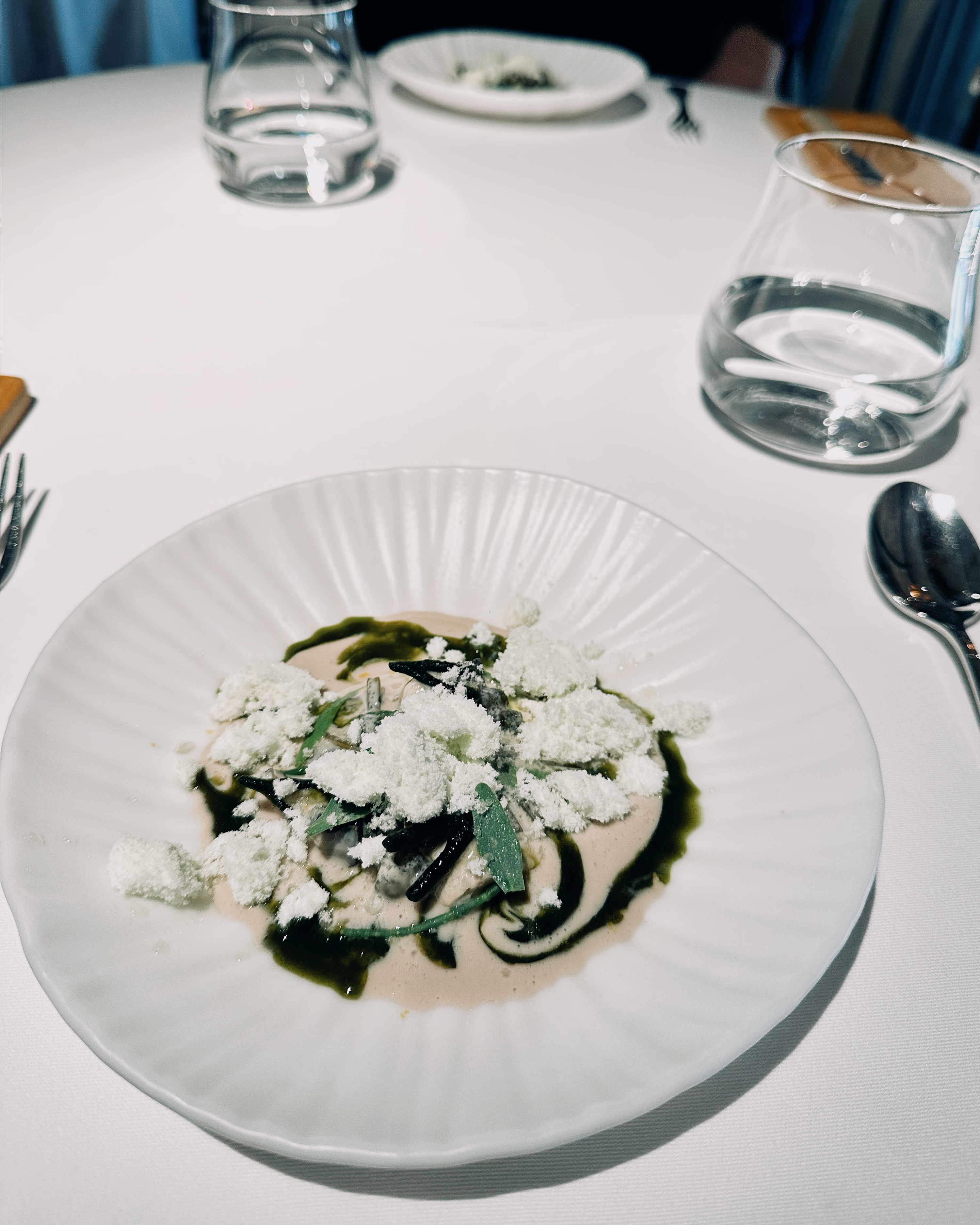
Chef José Avillez’s flagship is the kind of meal you talk about for months. Twelve courses. Before each one, a small illustrated card arrives, a whisper of what’s coming. The dish that rewired my brain: seaweed and oyster topped with cucumber and green apple shaved ice. The Portuguese have a word for it: Rebentação, untranslatable, but it captures the moment ocean waves crash against rocks. That’s what this dish tasted like. A feeling on a spoon. Worth every euro.
Cais do Sodré, Lisbon — Affordable
The Time Out Market is not a tourist trap if you know what to order. Head straight to Octo Dog for the octopus hot dog, which is exactly as good as it sounds. Casa dos Pecados and Cantina 32 are also worth visiting for their own take on charcoal octopus.
Café de São Bento has been serving the same buttery, peppery steak since the ‘80s. Bar Alimentar near Campo de Ourique is where locals go for tinned fish, charcuterie, and bold natural wines.
Before you leave Lisbon, spend some time in LX Factory, a former industrial complex turned creative hub filled with shops, restaurants, and murals. If you have an evening free, book a fado dinner in Alfama or Bairro Alto. It’s one of those experiences that stays with you.
Porto is grittier, more industrial, and in many ways more honest than Lisbon. The food reflects that. This is the city of the francesinha, a towering, sauce-drenched sandwich layered with meat and melted cheese that is equal parts absurd and magnificent. We didn't dare to order one
We’d recommend booking a guided food tour in Porto before you do anything else. It takes you to the vendors, the markets, the tascas that don’t have an Instagram presence, the kind of places locals actually go.
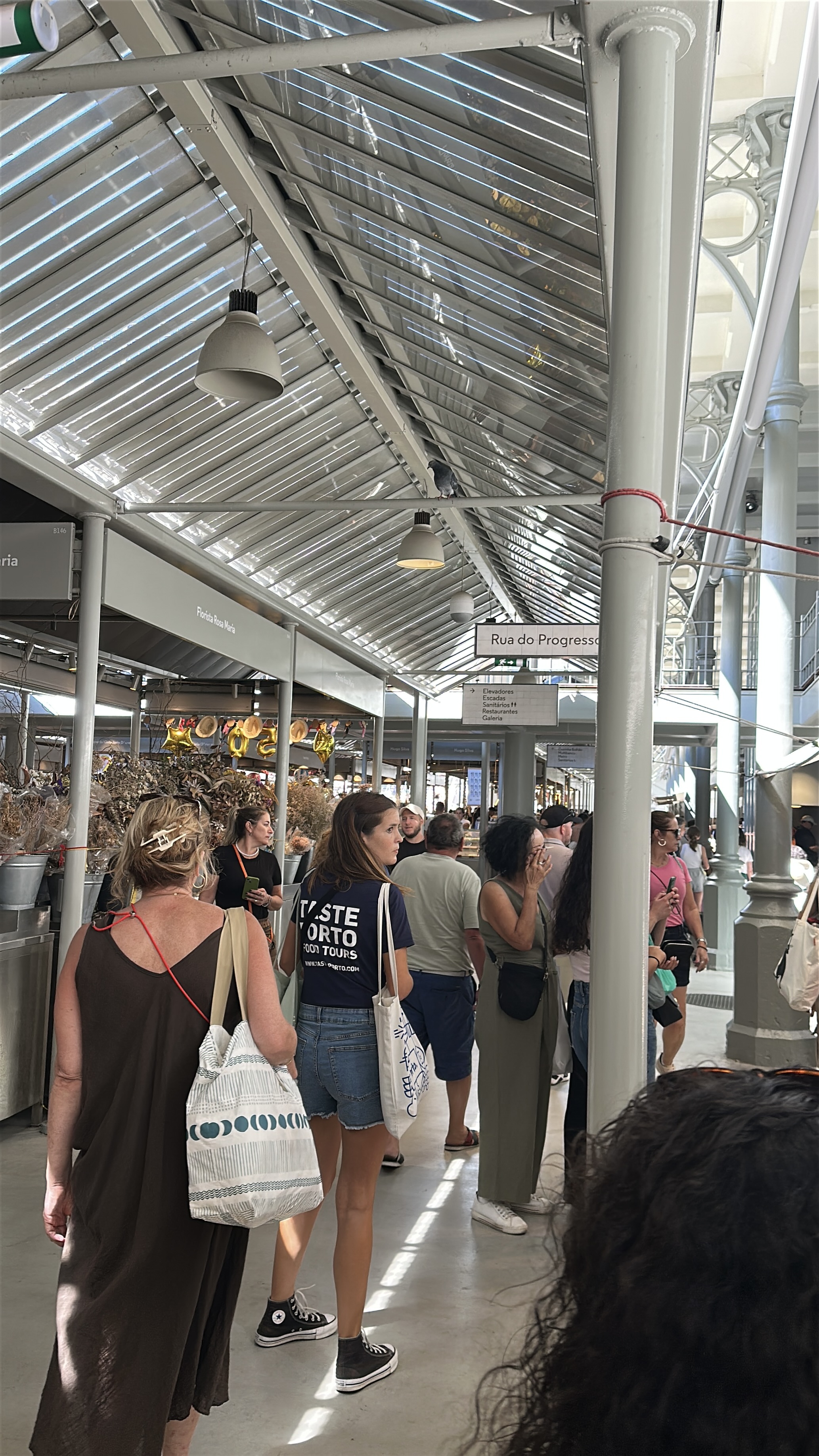
A free walking tour in both cities will cost you nothing and give you everything: context, history, the neighborhoods that don’t make the highlight reels.
In both Lisbon and Porto, join a free walking tour early in your stay. They’re donation-based, they run daily, and a good guide will completely reframe how you see the city before you’ve even had lunch. Check out: https://www.guruwalk.com
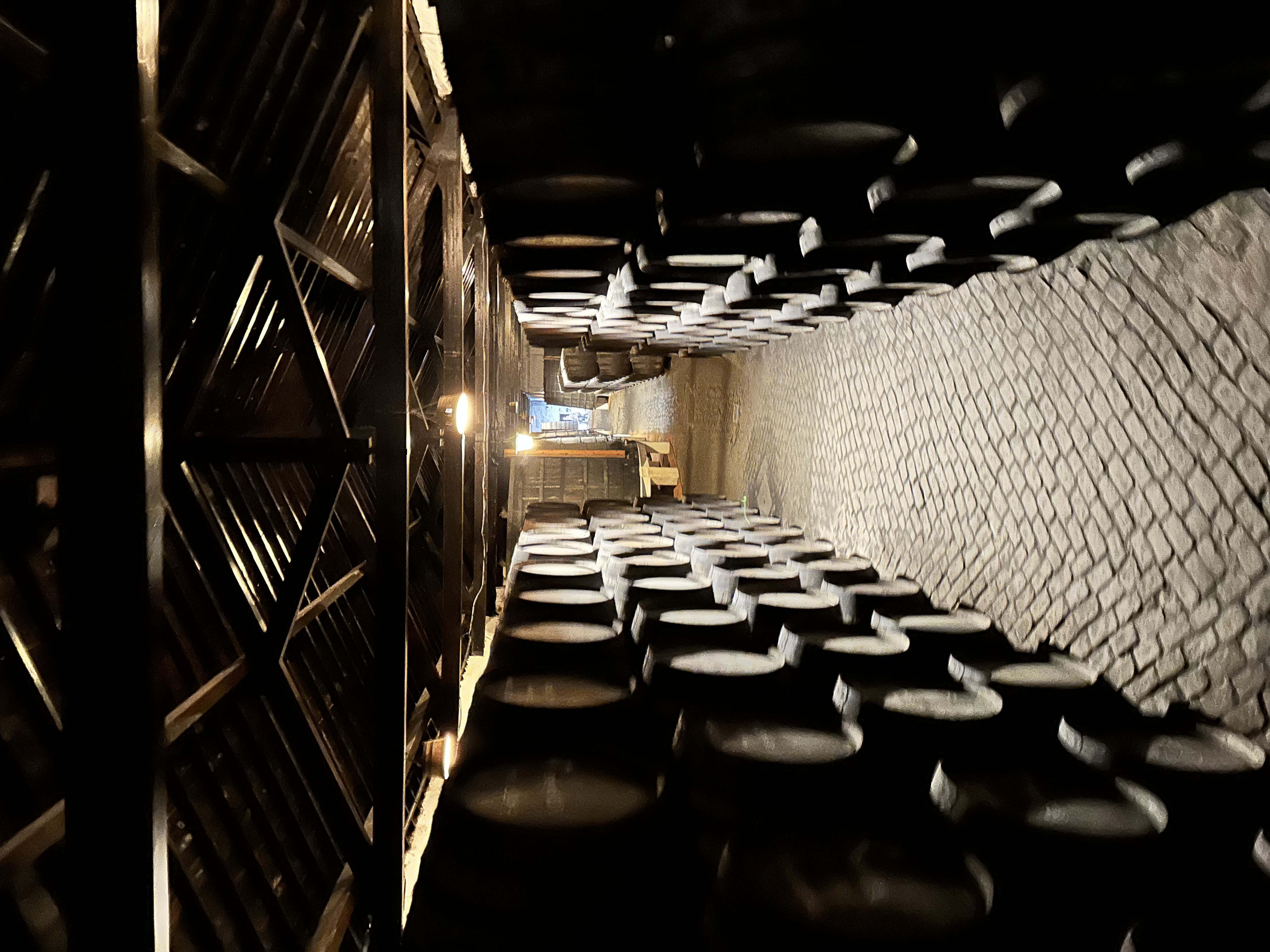
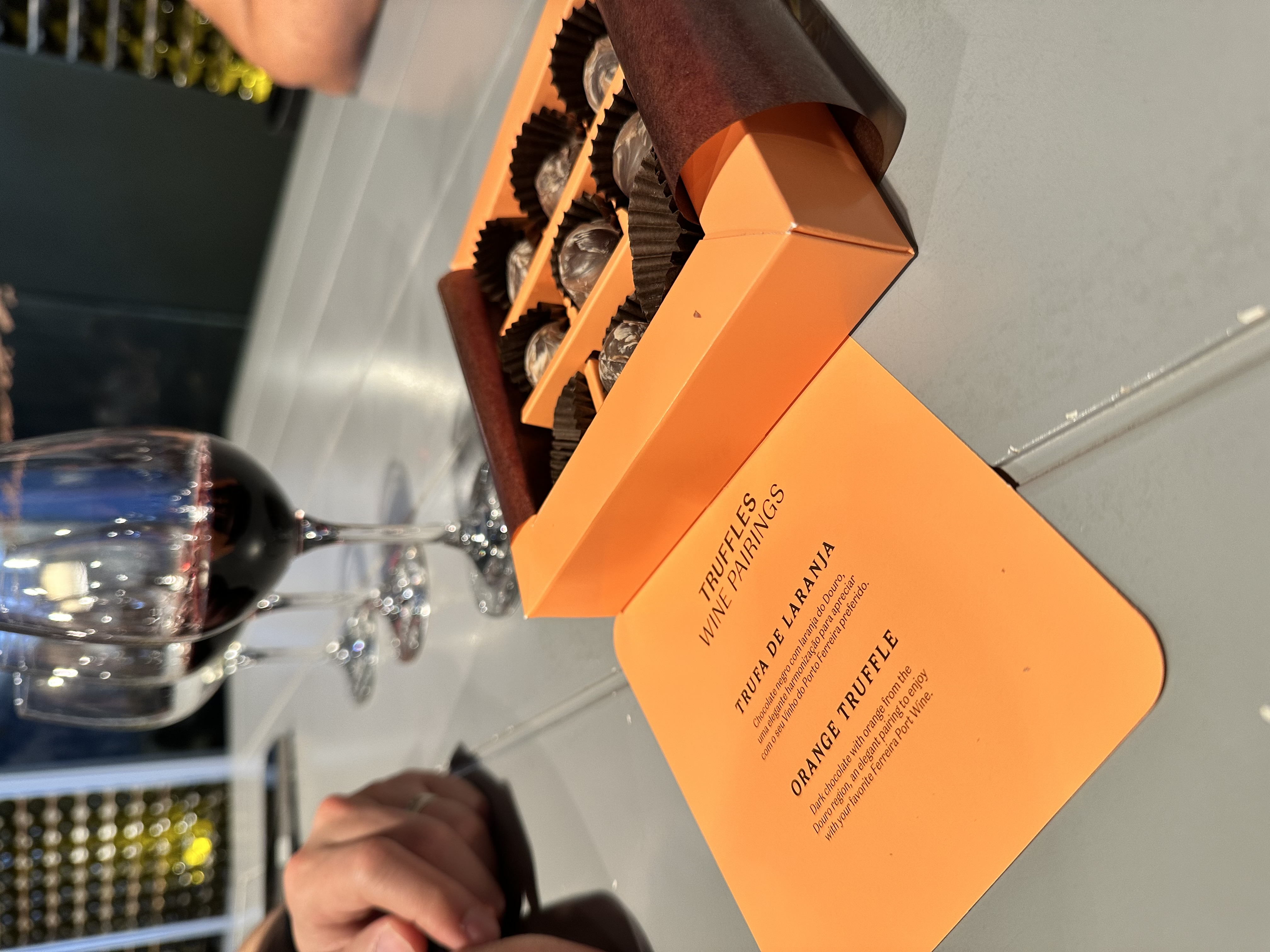
Porto is where port wine comes from, and doing at least one cellar tour is non-negotiable. The caves along the Vila Nova de Gaia waterfront are dramatic, cool, and deeply atmospheric. You’ll taste the range, light white ports, ruby, and aged tawnies that smell like fig and caramel and something ancient.
Portugal is one of those places that rewards the traveler who slows down. The best meals happen late. The best views are at the end of a steep walk. The best conversations start at a counter with a glass of vinho verde in hand.
If you’re already in the middle of planning, booking through the links below helps support this journey at no extra cost to you. Use them to find food tours, port wine tastings, walking tours, and day trips across both cities.
And if you want help putting together the full trip, where to stay, how to structure your days, or how to get the most out of your points and travel cards, feel free to reach out. That’s exactly what I’m here for.
This post was created with Claude as a thought partner for structure and flow. All experiences, opinions, and recommendations are entirely my own. Some links are affiliate links, booking through them supports Adotimpact at no extra cost to you.
I'm a travel advisor. If this post gave you ideas and you want help turning them into a real trip, I'm here for that conversation.
Let's design your adventure →I arrived in Hoi An with a full itinerary. Museums, cooking class, sunrise boat tour. None of that happened. Instead I just walked every evening, starting at the covered bridge and ending wherever the lanterns were brightest.
The lanterns come on all at once — right as the sun disappears. Every single time, it takes your breath away.
At dusk, the last light catches the waterway gold and the reflections look painted. Stand there long enough and someone will hand you a lantern to release.
That is when the tour groups leave and the town exhales. Locals set up plastic stools, someone always has a speaker going, and there is banh mi for forty cents from a cart near the market.
Ceramics, cao lau, and flowers from the morning market. The three food groups of Hoi An.
I can build you a Vietnam itinerary that saves the best spots for the right time of day — and skips everything that is just for the gram.
Let us plan it →The Cat Who Judges My Zoom Calls
Fibi has been sitting in that exact spot since Tuesday. She has strong opinions about my Zoom background. Also about the lighting. Also about whether I have had enough water today.
Some mornings the best creative output is a cat drawing before 7am and a cold glass of water.
— A·dot, probably every Tuesday